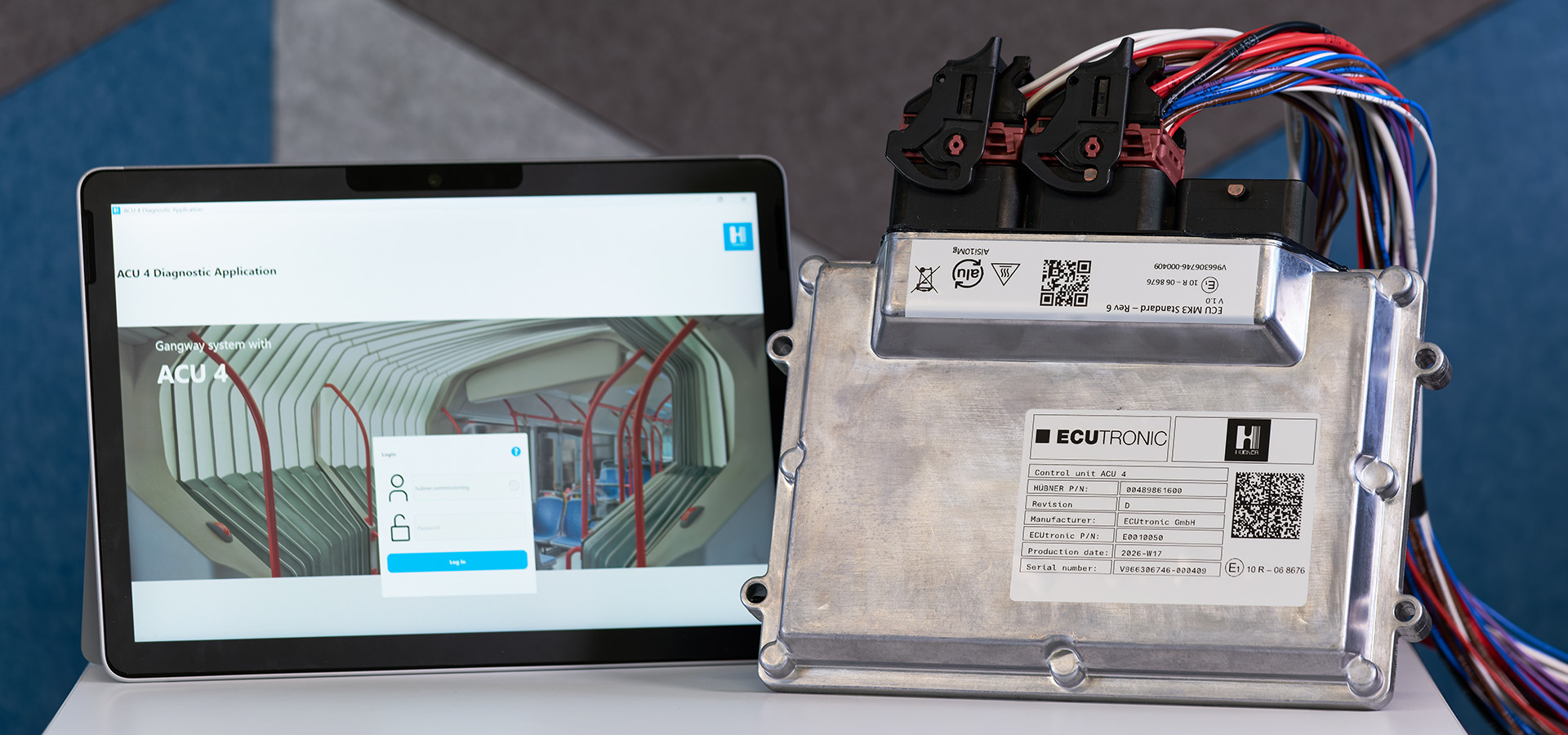
In industries such as agriculture, construction, and transportation, the certification requirements for electronic systems are demanding. Certifying new hardware is both time-consuming and costly. ECUtronic provides a significant market advantage: we rely on generic electronic control units (ECUs) that are already certified for use in road vehicles.
Instead of reinventing the wheel, we leverage this robust hardware platform and equip it with application software specifically developed for your individual use case.
Generic hardware for a wide range of applications
Whether in the field, on the construction site, or on the highway, our ECUs are designed for a broad spectrum of applications. We understand the unique requirements of your industry and provide solutions tailored to your needs.
- Agriculture and forestry: We develop solutions for complex implements in accordance with ISO 25119 (Agricultural Performance Level – AgPL) and ensure ISOBUS compatibility.
- Construction and earthmoving Equipment: For excavators, wheel loaders, and other heavy machinery, we support safety requirements in accordance with ISO 19014 (Machine Performance Level – MPL).
- Commercial vehicles and tier-1 suppliers: Standards-compliant development according to ISO 26262 (Automotive Safety Integrity Level – ASIL) for demanding on-road applications up to ASIL C.
- General machinery and equipment manufacturing: Implementation of safety functions in accordance with ISO 13849 (Performance Level – PL).
To support as many applications as possible, our ECUs provide a comprehensive range of interfaces:
- CAN, LIN, and Automotive Ethernet
- Digital and analog inputs (voltage and current measurement supported)
- High-performance digital outputs (continuous current/voltage or PWM-controlled outputs up to 2 A per channel)
Connectivity and Cybersecurity
Modern vehicles and machines are increasingly connected. To ensure that connectivity does not become a security risk, ECUtronic integrates proven cybersecurity mechanisms directly into its generic ECU platform.
We support the development of system concepts in accordance with ISO/SAE 21434 and already consider the requirements of ISO/DIS 24882 for agricultural and construction machinery.
Built for harsh environments: vibration, temperature, and EMC resistance
Our ECUs are engineered for demanding operating conditions. To ensure maximum durability and reliability, we rely on high-grade materials and industry-leading protection standards.
- IP6K9 protection rating: Fully dustproof and resistant to high-pressure cleaning.
- Wide operating temperature Range: Reliable operation from -40°C to +80°C.
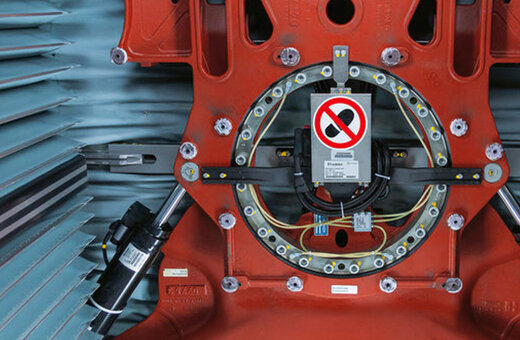
- EMC compliance: Certified according to ISO 11452-2/-4 and ISO 7637-2/-3, with additional conformity to ECE R10.
- Environmental robustness: Certified resistance to vibration (ISO 16750-3), mechanical shock (IEC 60068-2-29), free fall (ISO 16750-3), humidity (IEC 60068-2-11), salt spray (IEC 60068-2-52), solar radiation (IEC 60068-2-5), and ozone exposure (ASTM D 1171-99).
Full-service engineering - from prototype to series production
Small and medium-sized companies in particular benefit from our holistic approach. We act as your external electronics and software engineering department and support you throughout the entire product development lifecycle.
- Prototype development: We actively support the early stages of development, provide test software releases, and conduct joint testing activities.
- Production readiness: We ensure that both hardware and software are fully prepared for series production. Every ECU undergoes a final outgoing inspection before delivery.
- After sales support: Once your ECU is deployed in the field, we remain available for monitoring, maintenance, and feature updates. Throughout the entire product lifecycle, you benefit from dedicated and experienced points of contact.
While large suppliers are often reluctant to support low-volume projects, flexibility is one of our core strengths. We work with you as a partner on eye level and implement customized development requirements cost-effectively, even for smaller production volumes.